Explore Orinda's history through the lens of where you live.
Orinda is made up of distinct neighborhoods, each with its own founding story, architectural era, and place in the larger arc of the city's history. Some go back to the rancho era. Others were carved out of summer-cabin enclaves after the Caldecott Tunnel opened in 1937. A few are still being built.
This page is where we tell those stories. Pick a neighborhood from the list to jump to its section, or scroll to explore them in order.
Jump to a neighborhood
The original commercial heart of Orinda
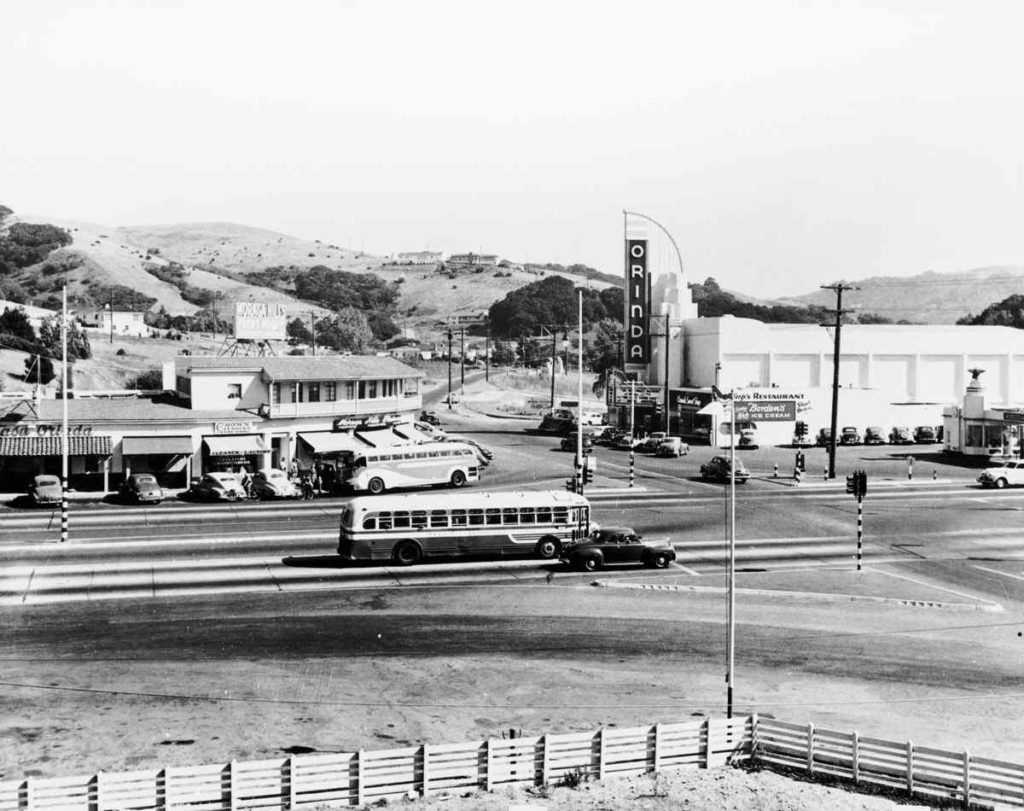
At a glance
Era: Late 1800s onward
Anchor landmarks: Orinda Theatre (1941), Theatre Square
Key streets: Orinda Way, Moraga Way, Bryant Way
Historical significance: Site of Bryant Station (California–Nevada Railroad), oldest commercial district in Orinda
The Crossroads sits at the meeting point of Moraga Way and Orinda Way, just south of the BART station. It's the oldest continuously commercial part of Orinda, and the most photographed.
The area got its first identity in the 1880s as the location of Bryant Station, one of three Orinda stops on the short-lived California–Nevada Railroad. The station sat slightly south of where the Orinda Theatre stands today. Once the railroad collapsed at the turn of the century, the area continued to function as a small rural crossroads until the Caldecott Tunnel opened in 1937 and brought commuters in from Oakland.
The Orinda Theatre opened in 1941 and immediately defined the district's character. Designed by architect Alexander Cantin in the Art Deco style, the theatre's distinctive marquee became (and remains) the most recognized landmark in town. Around it grew the Theatre Square district: shops, restaurants, and the everyday infrastructure of a small downtown.
Today, the Crossroads continues to evolve, but the Orinda Theatre still anchors the skyline, and the original street pattern still tells the story of where Orinda started.
The original residential heart of Orinda, founded in the 1920s
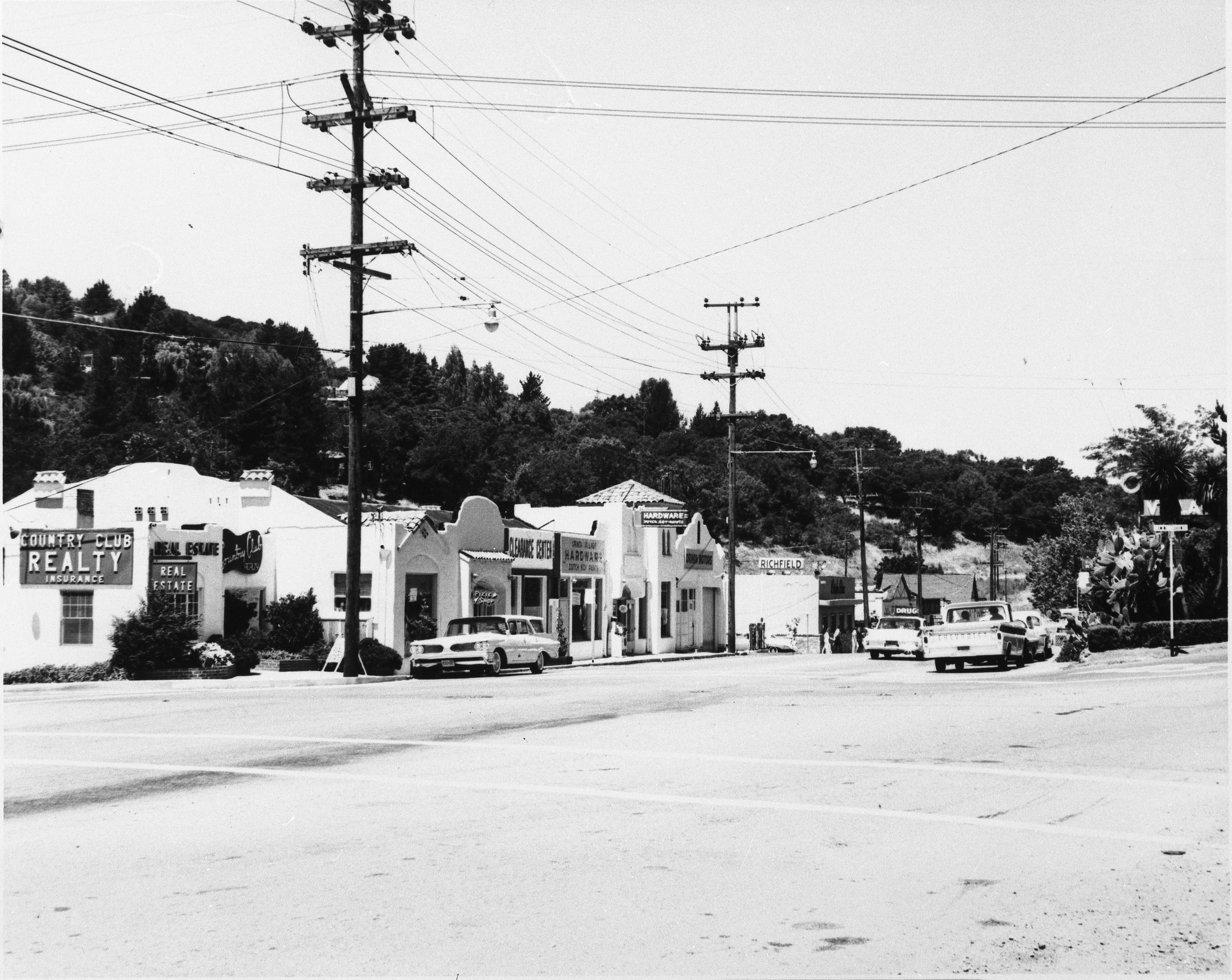
At a glance
Era: 1920s onward
Founding development: E.I. de Laveaga's Orinda Village plan
Key streets: All those Spanish-named streets (Bien Venida, Camino Pablo, El Toyonal, etc.)
Historical significance: Orinda's first planned residential community
When E.I. de Laveaga began developing the valley west of San Pablo Creek in the mid-1920s, he envisioned not just a subdivision but a community. He laid out streets, named them all in Spanish (see Spanish Street Names of Orinda), and built around them the Orinda Country Club, a swimming pool, and a golf course that's still in use today.
The earliest homes in Orinda Village date to the 1920s and 1930s, mostly Spanish Revival and ranch styles. After the Caldecott Tunnel opened in 1937, building accelerated. By the postwar years, Orinda Village had become a recognizable East Bay community with its own identity, separate from the older Crossroads district just to the south.
The Village still feels distinctly residential. Many of its original homes are still standing, and the de Laveaga family's original home, Bien Venida, remains in the family. E.I.'s granddaughters still live there.